Case Study

Rare Diseases Patient Support Program across multiple territories

Download Case Study


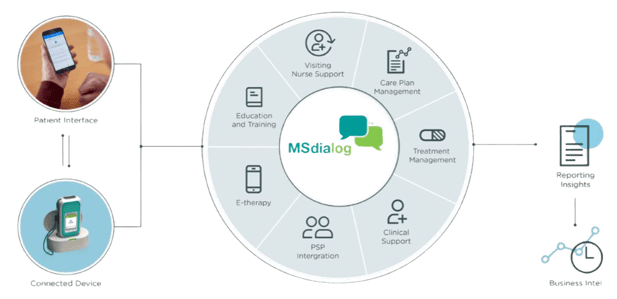
MSdialog, a digital patient support program, was designed
to give multiple sclerosis (MS) patients control over the
management of their disease, in the administration of their
treatment in combination with a connected injection
device (RebiSmart), and facilitate meaningful dialogue
between patients and clinicians. Having been localized and
deployed in 39 countries, and supporting 40 languages, S3
Connected Health played a key role in design,
development and delivery of the mobile and web-based
system

Merck rare disease psp header

The program

MSdialog
  • Deployed in 39 countries
  • Supporting 40 languages
  • Designed to support a large population of patients across multiple territories
  • Providing support for local care protocols
  • Providing real-world evidence for pharma client, payors, and HCPs
  • Designed to facilitate EHR and disease registry integration

    Includes:
  • Connected injection device that communicates to patient interface / mobile app (RebiSmart)
  • System Includes: education and training, eTherapy, PSP integration, clinical support, treatment management, visiting nurse support
  • Reporting, insights, and business intelligence portal


The project

Outcomes

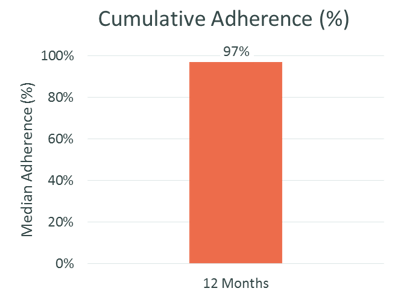
Patients with RMS self-injecting REBISMART® had excellent adherence at 12 months, which was associated with good clinical outcomes


SMART Observational Study

SMART Study - Cumulative Adherence
Adherence levels prospectively measured with REBISMART were very high and confirmed findings from previous 12-week user trials
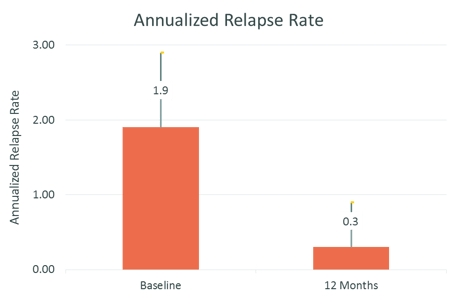
SMART Study - ARR

Treatment with REBISMART was efficacious: 80% of  patients were relapse-free at 12 months, mean ARR was significantly lower at 12 months and EDSS did not increase during the study period


Source: Adherence to, and effectiveness of, subcutaneous interferon β-1a administered by RebiSmart® in patients with relapsing multiple sclerosis: results of the 1-year, observational SMART study: Expert Opinion on Drug Delivery, 2015, 12:8, 1239-1250


Effect of adherence on outcomes STAR Observational Study


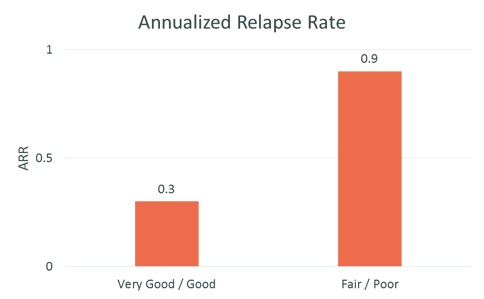
STAR Study - ARR

Treatment with REBISMART was efficacious: 80% of patients were relapse-free at 12 months, mean ARR was significantly lower at 12 months and EDSS did not increase during the study period

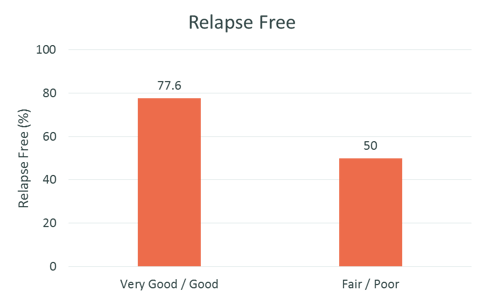
STAR Study - Relapse Free
Patients with very good / good adherence had better treatment outcomes vs. those with fair / poor adherence: a greater proportion of patients were relapse free and ARR was significantly lower


Source: The STAR Study: A Real-World, International, Observational Study of the Safety and Tolerability of, and Adherence to, Serum Free Subcutaneous Interferon β-1a in Patients With Relapsing Multiple Sclerosis; Hupperts, Raymond et al.; Clinical Therapeutics, Volume 36, Issue 12, 1946 – 1957

To learn more about how we help life science companies develop robust digital health strategies get in touch with us today

Contact Us